
Making Your Golf Cart Street Legal in the US: A Comprehensive Guide
There’s nothing quite like cruising around town in your trusty golf cart—wind in your hair, sun on your face. But hold on! Before you hit the streets, you need to nail down the ins and outs of making your golf cart road-legal in the US. This blog breaks down everything from golf cart types to the must-haves for legal public road use. Let’s drive in!
> Difference between golf carts & LSV & NEV
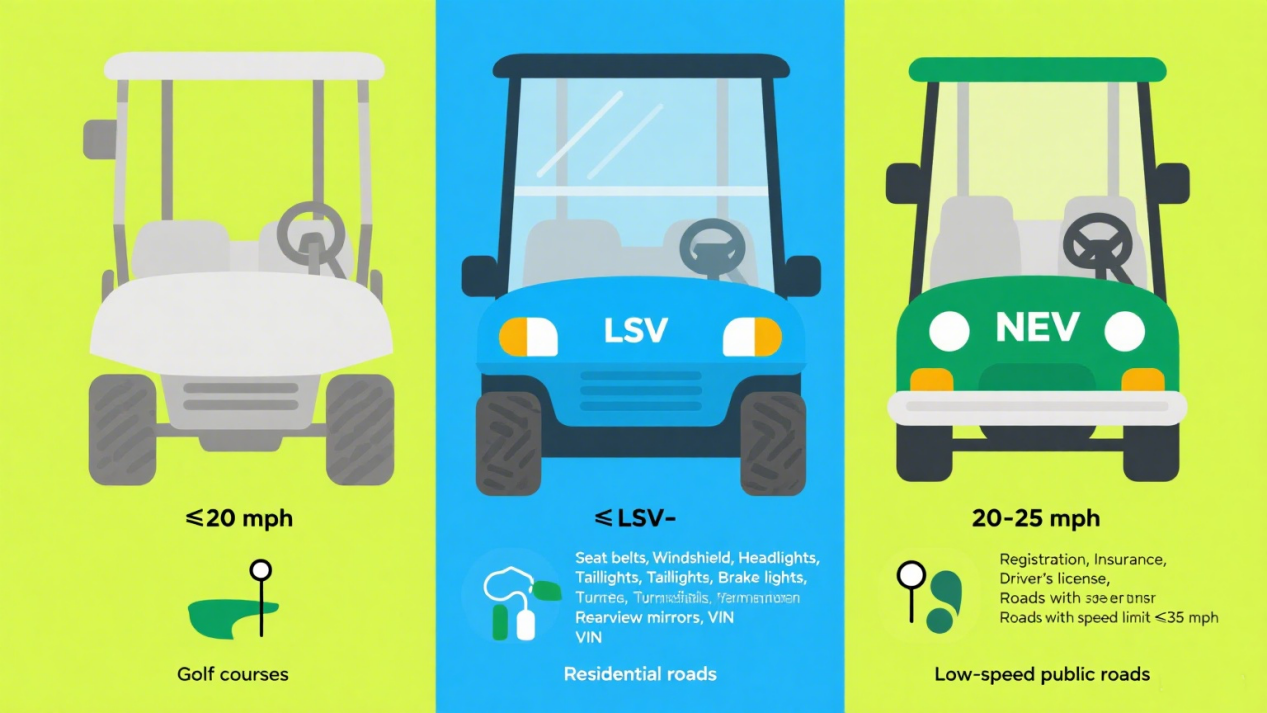
Golf carts come in a variety of shapes and sizes, each with its own unique features and capabilities. They're typically powered by electricity or gas and are designed primarily for use on golf courses. Traditional golf carts are usually smaller and more compact than other types, making them easy to maneuver around tight corners and narrow paths.
-
Traditional Golf Carts: In some regions, there are no strict requirements for safety equipment comparable to that of LSVs. However, in certain states or cities, basic safety features such as rearview mirrors and brake lights may be required to meet safety standards for driving on designated roads.
-
Low-Speed Vehicles (LSVs): Typically require safety belts, windshields, rearview mirrors (including the driver-side exterior rearview mirror and the passenger-side interior or exterior rearview mirror), horns, headlights, taillights, parking lights, side reflectors, parking brakes, turn signal lights, and a Vehicle Identification Number (VIN), among other features.
-
Neighborhood Electric Vehicles (NEVs) are U.S.-classified four-wheeled electric vehicles, with a max speed of 20-25 mph. They need mandatory safety gear like headlights, seat belts and mirrors, plus registration, insurance and a valid driver’s license to run on roads with speed limits ≤35 mph.
Street-Legal Golf Carts (SLGCs)
As the name suggests, SLGCs are designed specifically for public roads—they must meet key safety and equipment rules to be legal. Think headlights, taillights, turn signals, seat belts, and windshields (more on these below).
> When Can a Golf Cart Be Legally Driven on the Road?
A golf cart can only hit public roads if it qualifies as an LSV or NEV. Rules vary by state, but most require three things:
-
Max Speed: LSVs and NEVs top out at 25 mph (some states allow slight exceptions, but 20–25 mph is standard for safe operation).
-
Vehicle Classification: The state’s DMV or relevant agency must classify it as an LSV/NEV—this means meeting specific safety/equipment rules (see next section).
-
Road Conditions: Only allowed on roads with speed limits ≤35 mph. Some states add restrictions .
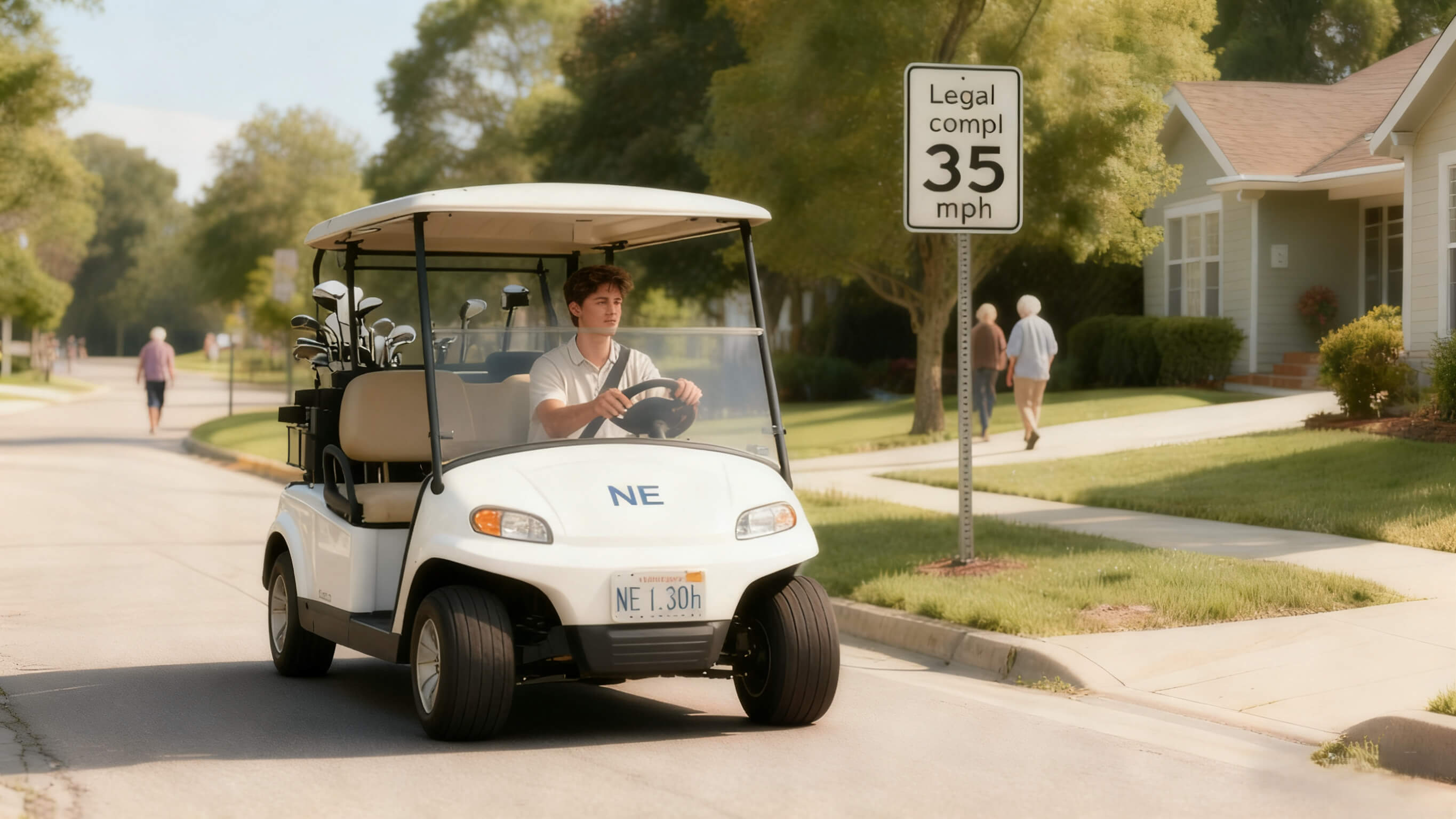
Even if your cart meets LSV/NEV rules, you may still need a special DMV license plate/registration. Many states also require liability insurance, just like a regular car.
> Required Equipment for a Street-Legal Golf Cart
To drive legally on public roads, your golf cart needs these safety features:

-
Headlights & Turn Signals: At least one white golf cart headlights (visible from 500+ feet, aimed to avoid blinding oncoming drivers). Turn signals are legally required in most states to signal your moves.
-
Taillights & Brake Lights: Red taillight (activated when headlights are on) and red brake lights (visible from 200+ feet, activated when braking).
-
Rear view Mirrors: Adjustable golf cart mirrors to clearly see the road behind—we offer a range of fits for golf carts.
-
Seat Belts: Mandatory for drivers and all passengers in most states. Ensure every seating position has a working seat belt.
-
Windshields: Not always legally required, but great for blocking wind, rain, and debris. If you install golf cart windshields, use durable, shatter-resistant material.
-
Reverse Buzzer: A must-have warning device to alert drivers and pedestrians when your cart is reversing.
Additional Requirements for Legally Driving a Golf Cart on the Road
In addition to having the proper equipment, there are a few other things you need to keep in mind when driving a golf cart on public roads:
-
Driver’s License: Most states require a valid driver’s license to operate an SLGC on public roads.
-
Insurance: Check your state’s DMV or insurer—many require liability insurance for golf carts.
-
Obey Traffic Laws: Treat your SLGC like a regular car: follow speed limits, stop at signs/red lights, and yield to other vehicles/pedestrians.
> How to Find Local Regulations
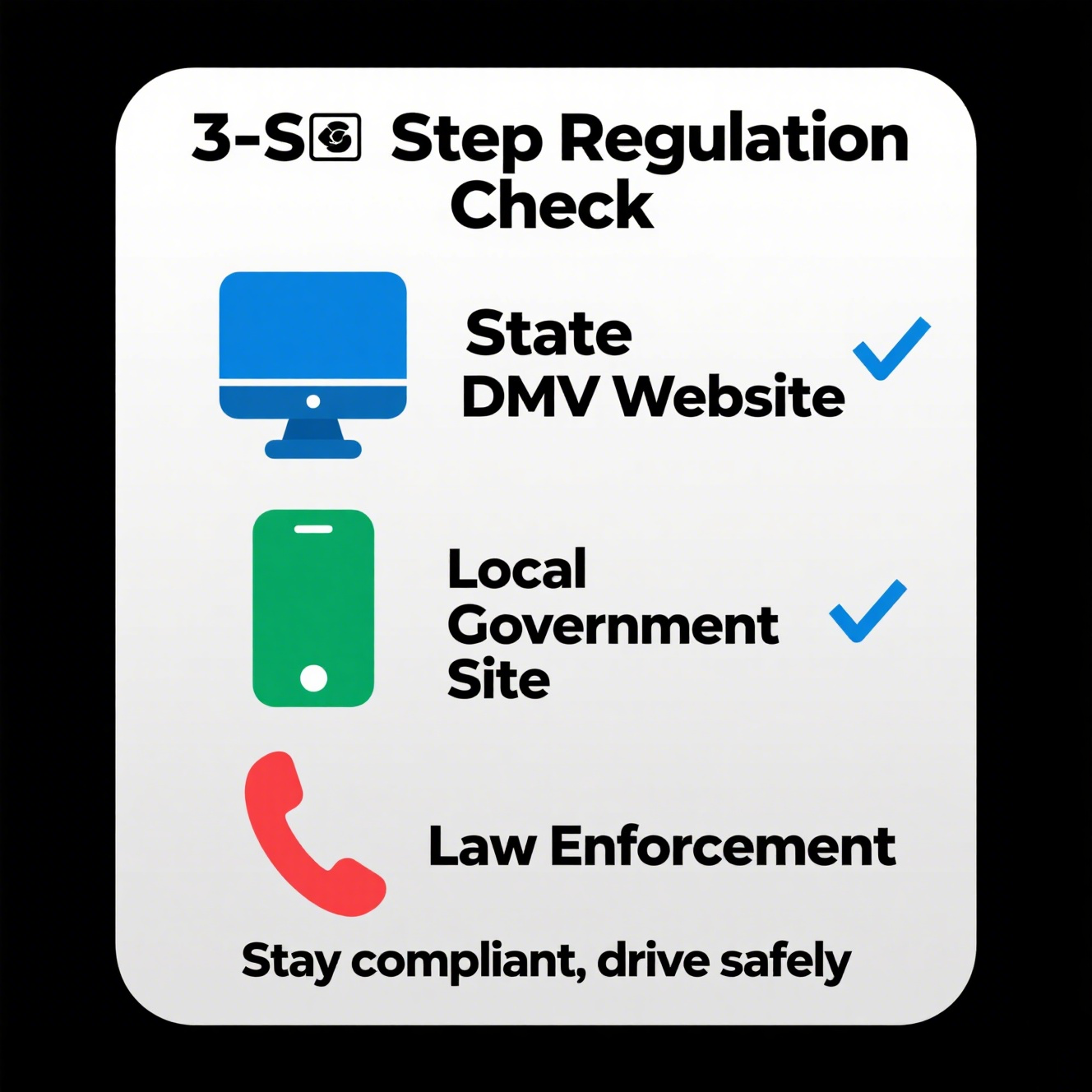
Rules vary by state and city—here’s how to get accurate info:
-
State DMV: Start here—they share details on registering SLGCs and state-specific requirements.
-
Local Government Websites: Many cities/towns post golf cart rules (e.g., traffic laws, restrictions) online.
-
Local Law Enforcement: Reach out with specific questions—they have up-to-date info on local rules.
In short, making your golf cart street-legal takes a bit of research and prep. By knowing the vehicle types, legal requirements, and must-have gear, you can keep yourself and passengers safe while enjoying the ride. And don’t forget: our Drive-up range has high-quality golf cart accessories (from headlights to windshields) to help you meet legal standards and boost your driving experience!